

1. Introduction
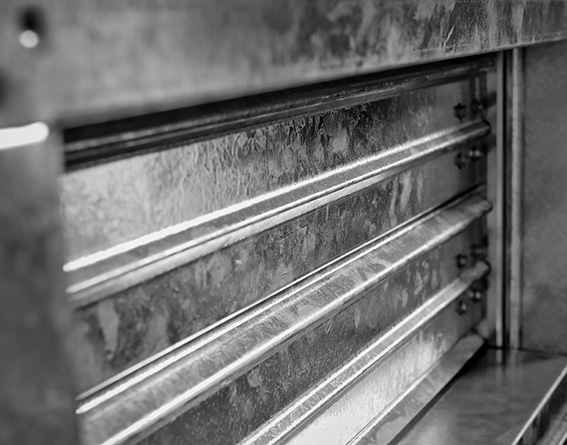
Fire dampers form an important part of the passive fire protection strategy of buildings, preventing the spread of fire and smoke through ventilation ductwork where it passes through fire-resisting compartment walls and floors.
Over approximately the last five to ten years, fire-damper inspection and maintenance reporting in the UK has become considerably more detailed. This has been driven by a combination of the post-Grenfell focus on passive fire protection, increased emphasis on competency and traceability, and improved industry guidance concerning the inspection of existing installations.
As a result, the interpretation and scope of competent inspection have broadened. Increasingly, fire-damper testing reports identify defects that historically may not have been recorded during a simple operational test. These can include inadequate installation (e.g. no breakaway joints or use of Tek screws), damaged or missing firestopping, inaccessible dampers, incorrect fixing arrangements, corrosion and incorrect damper types.
2. Relevant British Standards
The principal standards and guidance relevant to fire dampers include:
BS EN 15650 – Ventilation for buildings – Fire dampers
BS EN 15650 establishes requirements for fire dampers used within HVAC systems and references the appropriate testing and conformity-assessment arrangements. It is particularly relevant when considering the suitability and performance evidence for modern fire dampers.
BS EN 1366-2 – Fire resistance tests for service installations – Part 2: Fire dampers
This is the principal European fire-test standard for fire dampers. Testing to EN 1366-2 provides the basis for the fire-resistance and leakage performance classifications subsequently expressed under BS EN 13501-3.
This is important when reviewing older installations because a damper tested under older BS 476 arrangements does not necessarily have the same classification or evidence as a modern damper tested under the EN system. ASFP guidance specifically highlights the limitations of BS 476-tested dampers and the importance of EN 1366-2 testing where higher smoke-leakage performance is required.
BS 9999 – Fire safety in the design, management and use of buildings
BS 9999 provides established guidance for the inspection and maintenance of fire dampers. The longstanding principle is that fire dampers should be tested by a competent person following installation and at regular intervals, with spring-operated dampers requiring more frequent testing. Previous editions have specified a maximum two-year interval generally, with annual testing for spring-operated dampers and more frequent inspection where the environment is particularly dusty or contaminated.
BS 9991:2024 – Fire safety in the design, management and use of residential buildings
For residential buildings, BS 9991:2024 is now an important reference standard and provides current guidance for fire safety management and protection in residential premises. BSI identifies it as the current standard for this subject.
3. Industry Guidance
The Association for Specialist Fire Protection (ASFP) has become an increasingly important source of industry guidance for passive fire protection.
Of particular relevance is the ASFP Grey Book – Fire Dampers, which provides guidance to manufacturers, designers and installers concerning the specification, installation and performance of fire dampers.
ASFP’s more recent guidance reflects the wider industry move towards demonstrating that passive fire protection systems have been correctly designed, installed and maintained, rather than simply assuming that an installed component will perform correctly.
The ASFP has also developed a formal competence framework for passive fire protection, reflecting the industry’s increased emphasis on suitably trained and competent personnel carrying out inspection and remedial work.
4. Why Modern Testing Identifies More Defects
Historically, a fire-damper maintenance visit could be relatively straightforward: locate the damper, operate or release it, confirm that it closes correctly and record the result.
Modern inspections are much more likely to consider the complete installation, including:
- Correct damper type and size.
- Correct location within the compartment line.
- Physical condition and corrosion.
- Free movement and satisfactory closure.
- Condition of blades, springs and fusible links where applicable.
- Correct installation and fixing arrangements.
- Adequacy and condition of fire-stopping around the damper.
- Access arrangements for inspection and maintenance.
- Whether modifications to the ductwork or surrounding construction have compromised the original tested configuration (e.g. fit-outs).
This distinction is significant. A damper can operate correctly but the installation can still be defective from a fire-compartmentation perspective.
For example, a damper may close successfully during a functional test but have inadequate fire-stopping around the penetration. In a fire, the damper may close while fire and smoke can nevertheless bypass it through the surrounding opening.
5. Impact on Remedial Costs
A relatively inexpensive historical “test and pass/fail” exercise has now been superseded by a more in-depth assessment at every fire damper.
The increased scope of modern inspections has therefore resulted in a significant increase in the extent and cost of the recommended remedial works.
In older buildings, the cost can be particularly significant because access to dampers may require removal and subsequent reinstatement of ceilings, walls or other finishes.
6. The Post-Grenfell Effect
The Grenfell Tower fire in 2017 resulted in a fundamental increase in scrutiny of passive fire protection and compartmentation.
The industry has consequently moved towards a more evidence-based approach in which building owners and responsible persons are expected to be able to demonstrate that fire safety measures are properly installed, maintained and managed.
The ASFP’s recent guidance reflects this change. Its revised guidance for fire risk assessors, published in 2026, specifically recognises that where significant deficiencies in passive fire protection are identified, further specialist and potentially invasive inspection may be appropriate.
This is particularly relevant to fire dampers because many are concealed above ceilings and within risers, making a meaningful inspection difficult without suitable access.
7. Conclusion
The increased cost of fire-damper maintenance testing and remedials should therefore not necessarily be regarded as simply an increase in the price of testing.
Rather, the scope of what constitutes an adequate inspection has developed significantly. The modern approach considers not only whether the damper operates, but whether the damper, its installation, the surrounding compartmentation and the available performance evidence collectively provide reasonable assurance that the fire-resisting system will perform as intended.
This has inevitably resulted in more remedial works being identified, particularly in older buildings where installations may have been undertaken to previous standards or where records of original fire-testing, installation and subsequent alterations are incomplete.
The additional expenditure can therefore be viewed as a consequence of higher standards of inspection, improved understanding of passive fire protection and greater emphasis on demonstrating the integrity of compartmentation, rather than simply an increase in testing requirements.
That said, for new developments greater inspection and snagging inspection of fire dampers should be undertaken at Construction Phase to ensure that installation faults are picked up and rectified before they become a problem for building management and maintenance teams.
Principal References
- BS EN 15650 – Ventilation for buildings – Fire dampers.
- BS EN 1366-2 – Fire resistance tests for service installations – Fire dampers.
- BS EN 13501-3 – Fire classification of construction products and building elements – Part 3.
- BS 9999 – Fire safety in the design, management and use of buildings – Code of practice.
- BS 9991:2024 – Fire safety in the design, management and use of residential buildings – Code of practice.
- ASFP Grey Book – Fire Dampers.
- ASFP guidance on inspection and maintenance of passive fire protection.
Government guidance on fire safety in purpose-built blocks of flats.